
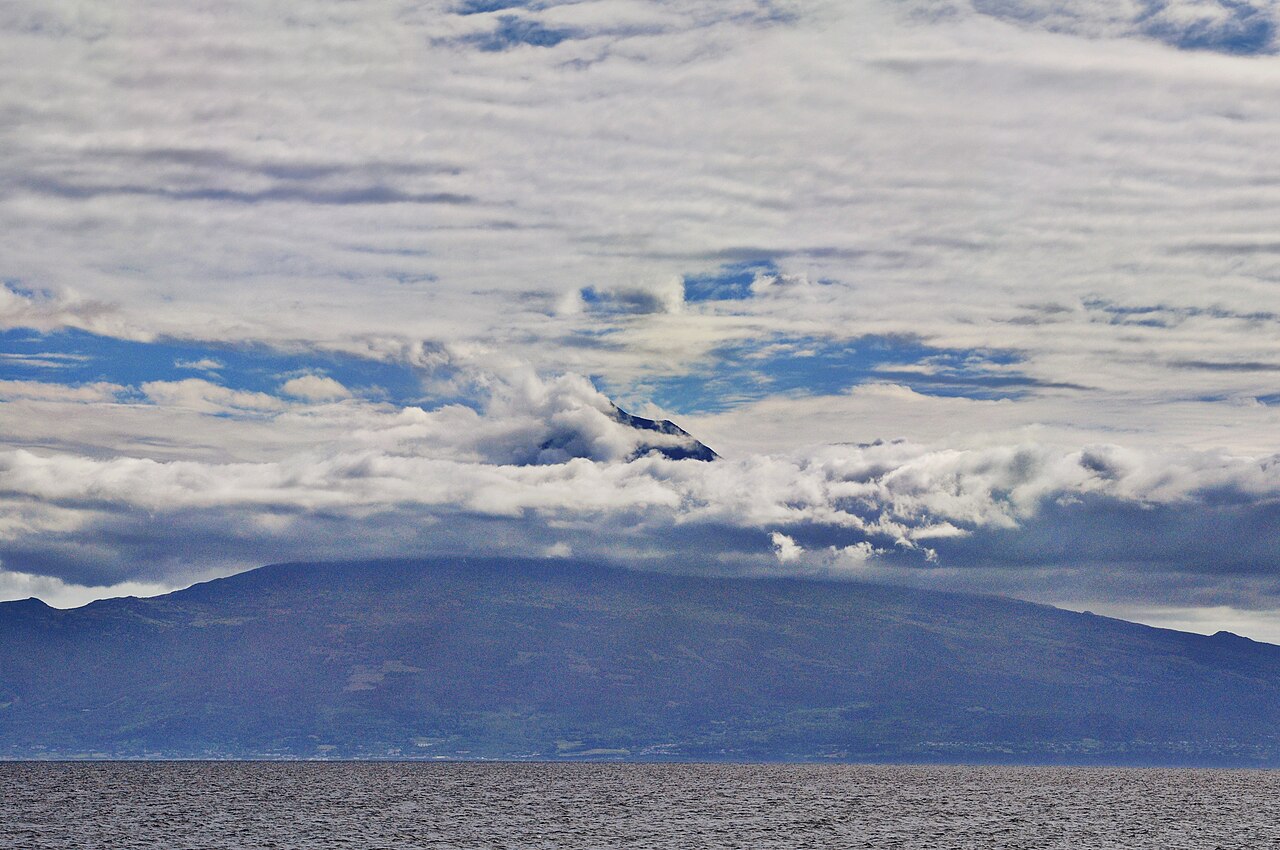
Pico is the island you see from afar. All across the central group, the perfect silhouette of the volcanic cone — 2,351 metres, Portugal’s highest point — imposes its presence. But Pico is far more than its volcano: it is the island of vineyards listed as UNESCO World Heritage, where vines nestled in walls of black lava defy wind and sea spray; it is also the world’s foremost sperm whale watching spot, where land vigias still guide boats toward the great cetaceans. Here, land and ocean converse with rare intensity.
At a glance
- Area: 446 km² — 2nd largest Azores island.
- Population: around 14,000 inhabitants.
- Access: Pico airport, SATA flights from Lisbon (direct in season), Terceira, São Miguel. Fast ferry from Faial (30 min).
- Ideal stay: 3 to 5 days.
- Must-see: volcano ascent, UNESCO vineyards (Lajido), whale watching in Lajes, Cachorro natural pools, Whaling Museum.
An island dominated by its volcano
Pico was born 270,000 years ago, the youngest of the Azores. Its volcano, still active (last eruption in 1720), structures the whole island: to the north and west, recent lava flows drape the coast in a black and tormented mantle; to the south, more fertile plains host villages and vineyards. The island is easy to travel: 42 kilometres long, a single main coastal road that captures the full contrast between southern and northern shores.
Signature experiences on Pico
Climb Mount Pico
The 8- to 10-hour round-trip ascent is demanding but accessible with good fitness. Mandatory with a certified guide, capped at 160 climbers a day, it starts from Casa da Montanha at 1,230 m. At the top, on clear days, you embrace the whole central group. Starting before dawn to see the sun rise above a sea of clouds is an unforgettable experience.
Walk through the UNESCO vineyards
The Lajido and Santa Luzia area, listed as World Heritage in 2004, offers a unique viticultural landscape: thousands of tiny plots (currais) enclosed by lava walls, where vines grow directly on basalt. A marked trail (PR5, 7 km) crosses the vineyard. To visit with tasting at the Czar cellar or the Cooperativa Vitivinícola.
Watch sperm whales and rorquals
Pico is the world’s best whale watching spot. From Lajes do Pico or Madalena, 3- to 4-hour trips with onboard biologist and sighting rates over 90%. Sperm whales year-round; blue and fin whales between April and June.
Bathe in the Cachorro pools
Natural pools carved into basalt lava, freely accessible. Bathing is secured by the rocky configuration, an authentic atmosphere away from the crowds. Ideal after visiting the vineyards.
Visit the Whaling Museum in Lajes
Housed in former boat sheds, this museum tells the saga of whale hunting up to its 1986 ban, and the island’s exemplary conversion to whale watching. Moving and essential to understand Pico’s soul.
Where to stay on Pico
Madalena and Lajes offer the most options: modern hotels facing the ocean, guesthouses in the centre, oceanfront apartments. For deeper immersion, rural quintas in the vineyards let you sleep in basalt stone houses — an unusual experience deeply rooted in the terroir.
Best time to visit
April to October. April-June for the diversity of cetaceans; July-September for the volcano climb in the best conditions; September-October for the harvest in the UNESCO vineyards. Winter is windier and the climb is often cancelled.
How to get there and around
Pico airport with direct flights from Lisbon in season, otherwise via Terceira or São Miguel. The fast ferry from Faial (30 min) is a very practical option. On site, rental car essential; count 1h30 to cross the island east to west.
Frequently asked questions
Is the volcano ascent suitable for non-athletes?
Good fitness is required (8 to 10 hours of walking, 1,100 m elevation). No technical passages but sustained effort. Not recommended for those with heart conditions, knee issues or altitude sickness tendencies.
Can you easily combine Pico and Faial?
Yes, it is the classic combination: 30-min ferry several times daily. Many travellers sleep on Faial and day-trip to Pico, or the reverse.
Are Pico wines available outside Portugal?
Rarely. Volumes remain small (under 2,000 ha total). The best way to taste remains buying on site — cellar prices between €8 and €25 per bottle.
Related articles & offers
- Pico wine: the UNESCO vineyards guide
- Whale watching in Pico
- Our tailor-made offers
- Our agency, Azores travel specialists
- Our private guided tours in the Azores
Location
Combining your Azores trip with mainland Portugal? Most flights transit through Lisbon — the perfect excuse to add a few days on the continent. Our partner agencies: Secret Lisbon, Secret Porto and Secret Portugal.