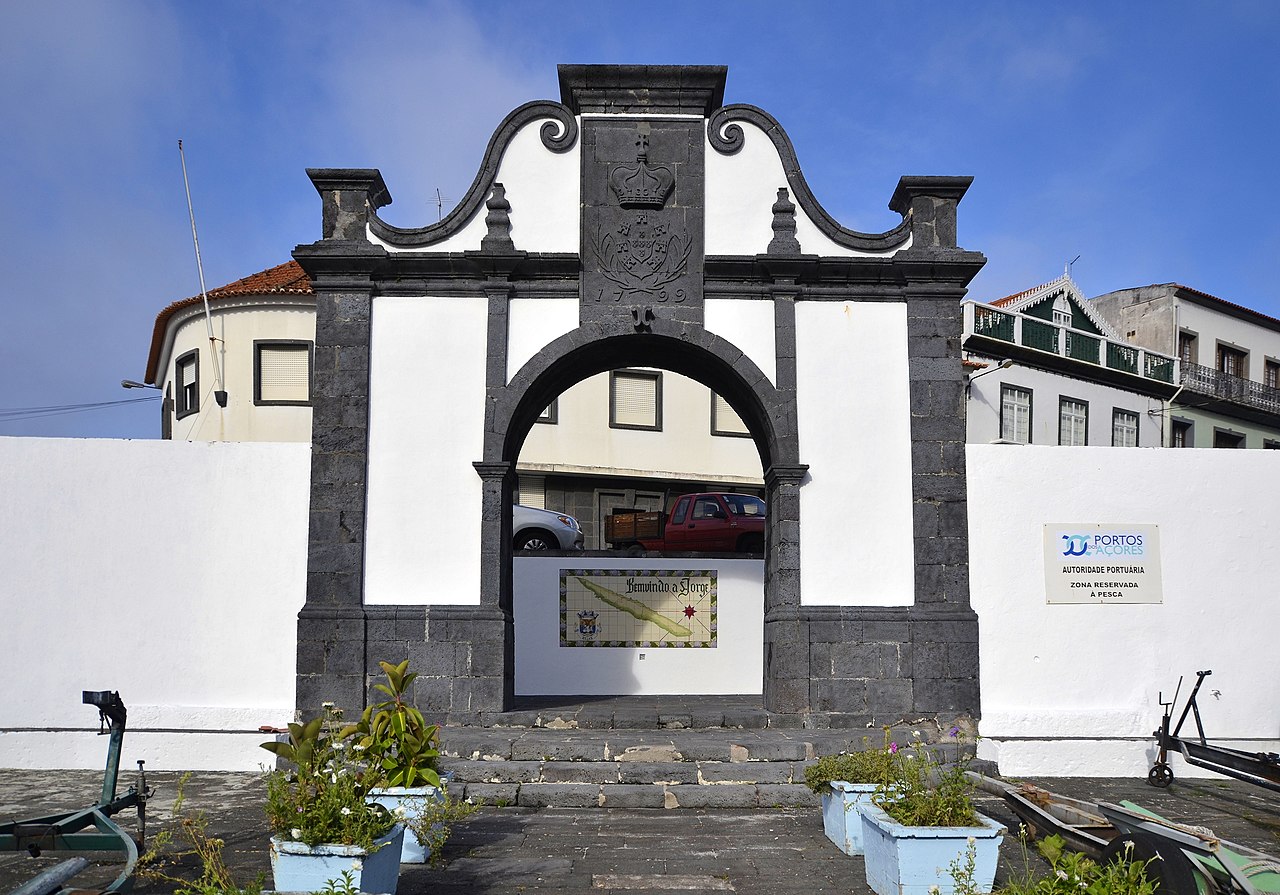
Narrow and stretched like a ridge, São Jorge is the most singular island of the archipelago. 54 kilometres long by only 7 wide, a central spine peaking at Pico da Esperança at 1,053 metres, and most of all — what makes its soul — about fifty fajãs. These coastal plateaus born from lava flows or landslides, reachable only by steep trails, make São Jorge a sanctuary for hikers and lovers of authenticity. Here, each fajã is a micro-world: fishermen, subsistence crops, brackish lagoons, stone houses cut off from the rest of the world.
At a glance
- Area: 238 km² — 54 km long, 7 km wide.
- Population: around 8,400 inhabitants.
- Access: São Jorge airport (Velas), SATA flights from Terceira, Pico or São Miguel. Ferry from Pico (1h).
- Ideal stay: 3 to 4 days for keen walkers.
- Must-see: Fajã dos Cubres, Fajã da Caldeira de Santo Cristo, Pico da Esperança, São Jorge cheese.
An island for walkers and food lovers
São Jorge was born from the alignment of several volcanoes, creating this distinctive elongated shape. Its cliffs sometimes plunge straight into the ocean — up to 700 metres of drop — except where they open onto fajãs, geological anomalies that offer flat land at the water’s edge. On the food side, the island is known for its queijo de São Jorge, a PDO pressed-paste cheese aged at least three months, considered one of the finest cheeses of Portugal.
Signature experiences on São Jorge
Hike to the Fajã da Caldeira de Santo Cristo
The emblem of the fajãs: an isolated coastal plateau holding a brackish lagoon and a small fishing village. Access only on foot (3 to 4 hours round trip via the PR1 trail from Serra do Topo) or by 4×4. Residents farm clams here, produce the famous cheese, and surf a world-class wave locally nicknamed “la Pororoca.”
Visit the Fajã dos Cubres
Accessible by car via a winding road descending from the ridge, this fajã combines a lagoon, a bird colony, a few houses and access to a pebble beach. Often covered by light mist in late afternoon, it offers one of the most bewitching atmospheres of the archipelago.
Climb the Pico da Esperança
The island’s highest point at 1,053 m, reached by a 6-km round-trip trail from Urzelina. On clear days, the panorama embraces Pico, Faial and Graciosa. One of the most beautiful belvederes in the archipelago.
Taste the São Jorge cheese
Several producers welcome visitors. In Beira, Uniqueijo offers a full visit of the production chain with tasting. Do not miss the “well-aged” version (12 months and more), bold and complex, surprising even seasoned palates.
Where to stay on São Jorge
Velas, the capital, offers a few modest hotels and nice guesthouses. For a more rooted experience, favour casas rurales in the fajãs or inland villages — some are simply restored, others luxuriously redesigned. Calheta Aldeamento Turístico provides access to a natural pool and coastal trails.
Best time to visit
May to September for hiking and swimming. The island stays lightly visited even in August. Winter is wet but the atmosphere of the fajãs in the mist is exceptional.
How to get there and around
Ferry from Pico (Calheta → Velas, about 1h) or Faial (Horta → Velas, via Pico), or flight from Terceira, Pico or São Miguel. Car essential to explore the accessible fajãs; the others must be earned on foot.
Frequently asked questions
Is São Jorge right for a first Azores trip?
Rather for an informed return. For a first trip, São Miguel or Terceira offer an easier first contact. São Jorge demands a real desire to walk and meet the island on its own terms.
Can you reach all the fajãs by car?
No, only some. The most spectacular (like Santo Cristo) must be earned on foot, or by 4×4 for residents. That is precisely what makes their charm.
Related articles & offers
- Which Azores island to choose?
- Our tailor-made offers
- Our nature activities
- Our agency, Azores travel specialists
- Our private guided tours in the Azores
Location
Combining your Azores trip with mainland Portugal? Most flights transit through Lisbon — the perfect excuse to add a few days on the continent. Our partner agencies: Secret Lisbon, Secret Porto and Secret Portugal.