
In brief
- Species: sperm whale year-round, fin whale, blue whale and sei whale April to June, common dolphin, bottlenose and occasional humpback whales.
- Best season: May to October for diversity, April to June for migrating great whales.
- Trip duration: 3 to 4 hours at sea, early morning departure from Lajes do Pico or Madalena.
- Sighting rate: over 90% thanks to land-based lookouts (vigias), inherited from former whalers.
- Budget: €70 to €90 per adult, children from €45.
Pico holds a singular place in the map of world-class whale watching. The waters around the island, deep and rich in squid, are a migratory corridor for great cetaceans. Where other destinations sell the encounter as a lottery, Pico presents it as a probability: the vigias, old watchtowers once used by whalers until the 1980s, have now been turned into observation posts that guide boats to groups spotted from a distance. The chances of meeting several species in a single trip are exceptional.
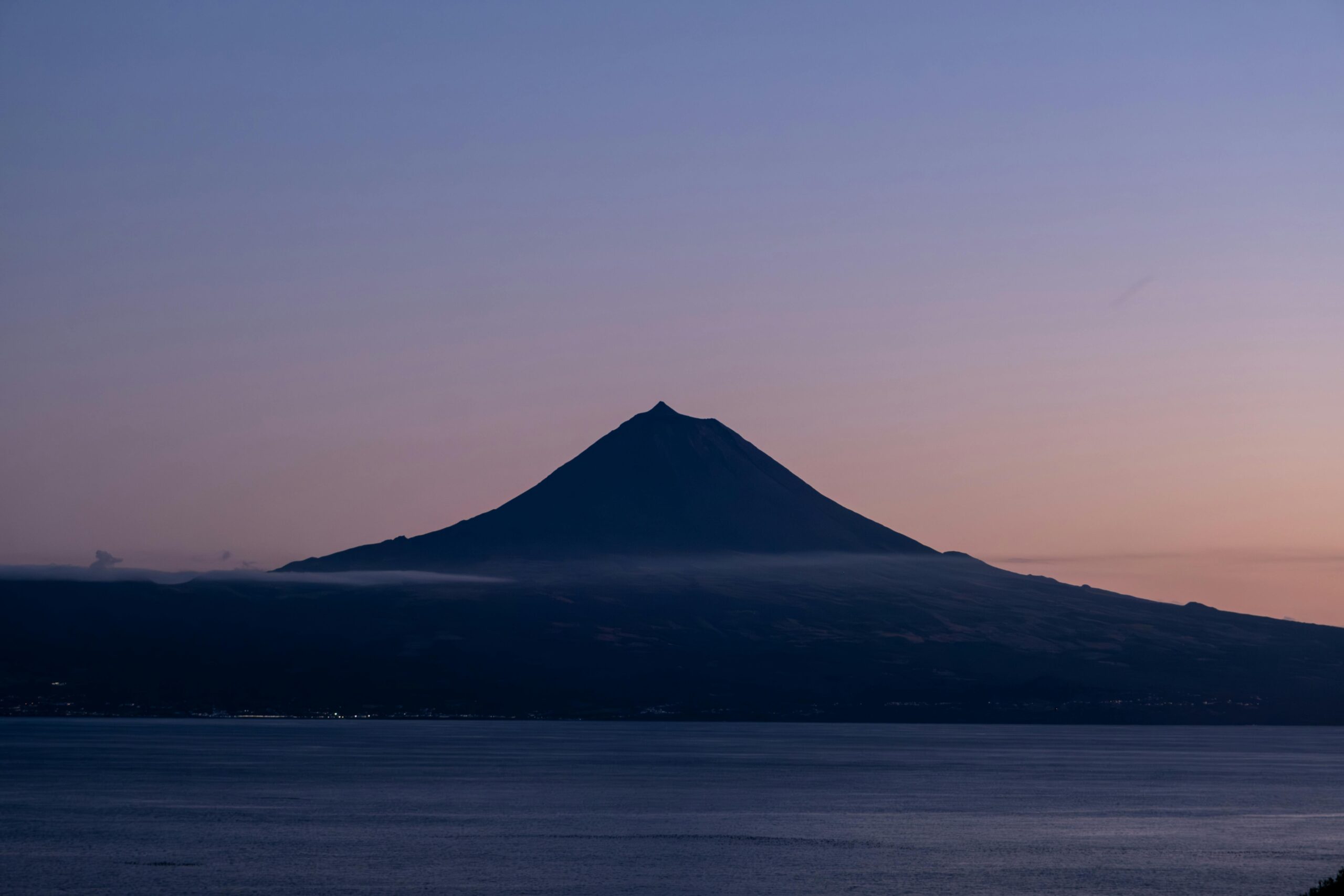
But the experience is not a species checklist. Being at sea off Pico, under the perfect silhouette of the volcano, at the precise moment a sperm whale arches its back and dives raising its fluke in a final salute, is a suspended moment that stays with you.
Which species for which season?
The sperm whale is the island’s flagship, present all year. Adult males dive over 2,000 metres to hunt giant squid and surface to breathe for 10 to 15 minutes, giving boats time to approach in good conditions. Their oblique blow is recognisable and their final dive, with that fluke rising in a salute, is the signature image of Azorean whale watching.
April to June are the most spectacular months because the great migrating rorquals pass offshore — blue whale (the largest animal alive), fin whale, sei whale. They only transit through, but every encounter is an event.
Dolphins accompany almost every outing: common dolphin, Atlantic spotted dolphin, bottlenose. They ride the bow wave, leap, travel in pods. In summer you may also meet short-finned pilot whales and, with real luck, passing humpbacks or orcas.
Lajes or Madalena: where to set sail?
Lajes do Pico, on the south coast, is the historic whaling port. It also hosts the beautiful Museu dos Baleeiros, worth visiting before or after your sea outing to understand the story of a hunt now banned and fully reconverted. A typical Lajes trip heads for the sperm whale diving grounds, 6 to 12 nautical miles offshore.
Madalena, on the west coast facing Faial, is the second hub. Fast departures, stunning views of the volcano along the way, ideal if you combine with a night in Faial. The most reputable operators — Espaço Talassa, CW Azores, Futurismo — run rigid inflatables (faster, more sporty) and catamarans (more stable, suited for children and seasickness-prone travellers).
How to prepare
Leave early: most trips sail in the morning when the sea is calmer. Pack a waterproof windbreaker, sunscreen, strap-secured hat, closed shoes and water. Polarised sunglasses help to spot cetaceans on the surface.
If you are prone to seasickness, take a tablet the night before and another in the morning. The Atlantic can be lively even in fair weather. Choose a catamaran over a rigid inflatable if you are unsure of your sea legs.
Children are generally welcome from 5 or 6 years old depending on the operator. Trips last 2.5 to 4 hours, with guaranteed return before noon in most cases.
Ethics and regulation
The Azores enforce a strict framework inherited from their conversion to sustainable tourism. Boats must keep a minimum distance of 50 metres from sperm whales and rorquals, 100 metres if more than one boat is present. Only three boats can approach a group simultaneously, and observation time is capped at 30 minutes. Engines switch to silent mode on approach.
Choose a certified operator displaying these rules clearly. The best operators carry a marine biologist on board who narrates the observation and collects scientific data — your trip contributes to research.
What to know about sighting rates
Operator figures hover around 95% annual sighting rates, sperm whales included. When weather forces cancellation, the operator usually offers a free reschedule or refund. Keep a floating slot in your schedule: if you are on Pico for 3 days and your first outing falls on a rough day, you still have two other opportunities.
Combining the outing with the rest of your trip
A typical Pico day can flow like this: 8 am, sail out for the sea trip; 12 pm, back in port and grilled fish lunch in Lajes; 2 pm, visit to the Museu dos Baleeiros; 4 pm, tasting at a UNESCO-listed vineyard cellar or bathing in the Cachorro natural pools; sunset at Miradouro da Terra Alta, facing the volcano.
If you have 3 days on Pico, add the volcano ascent (next day, with a guide) and a day trip to Faial by ferry.
Frequently asked questions
When are the most whales seen in the Azores?
April, May and June offer the widest diversity thanks to migrating rorquals. June to September stays excellent for sperm whales and dolphins, with calmer seas.
Are trips guaranteed?
Reputable operators offer a “sighting guarantee” with free reschedule or refund if no encounter happens, although the success rate usually exceeds 90%.
What is the difference between Pico, Faial and São Miguel for whale watching?
Pico offers the closest proximity to sperm whale diving grounds. Faial sits right across with comparable trips. São Miguel also runs trips from Ponta Delgada but the sperm whale zones are further offshore.
Can you swim with dolphins in the Azores?
Yes, specific “swim with dolphins” trips depart from Pico and São Miguel with small groups and strict regulation. Not with sperm whales or rorquals.